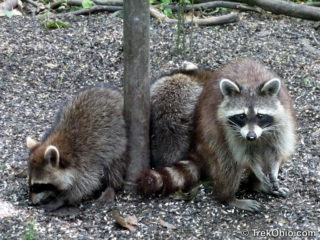
 Blacklick Woods Metro Parks is located in Reynoldsburg, an eastern suburb of Columbus. This 634 acre park has hiking, jogging, and bicycle trails, an abundance of picnic tables and shelters, playgrounds, a golf course, and a nature center.
Blacklick Woods was the first of the area Metro Parks, opening in 1948. It's extensive picnic / shelter areas are very popular and likely to be quite busy in good weather. A system of multi-use trails are often filled with strollers, joggers, and Read more ➜
Blacklick Woods Metro Parks is located in Reynoldsburg, an eastern suburb of Columbus. This 634 acre park has hiking, jogging, and bicycle trails, an abundance of picnic tables and shelters, playgrounds, a golf course, and a nature center.
Blacklick Woods was the first of the area Metro Parks, opening in 1948. It's extensive picnic / shelter areas are very popular and likely to be quite busy in good weather. A system of multi-use trails are often filled with strollers, joggers, and Read more ➜ Blacklick Woods Metro Park
Blacklick Woods Metro Parks is located in Reynoldsburg, an eastern suburb of Columbus. This 634 acre park has hiking, jogging, and bicycle trails, an abundance of picnic tables and shelters, playgrounds, a golf course, and a nature center.
Blacklick Woods was the first of the area Metro Parks, opening in 1948. It's extensive picnic / shelter areas are very popular and likely to be quite busy in good weather. A system of multi-use trails are often filled with strollers, joggers, and Read more ➜ 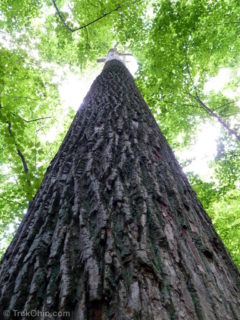 This nature preserve features old growth forest and hilly terrain. Set in the middle of an agricultural region, it's a peaceful area with one of the best wooded lots in the vicinity. There are two trails at the park: Conrad Trail (1.4 miles) and the Short Loop Trail (0.6 miles). The trail seemed well maintained; although, there was a portion of the trail that was quite narrow making it difficult to pass without touching the surrounding vegetation. The preserve's official site states that you can
 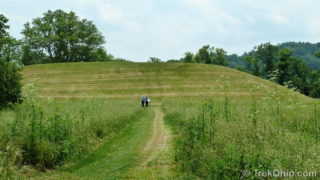 Seip Mound State Memorial Park is one of the five noncontiguous sites that make up the Hopewell Culture National Historical Park. The other four sites are Hopeton Earthworks, Hopewell Mound Group, High Banks Works, and the Mound City Group (reviewed by us here). Native Americans belonging to the Hopewell tradition constructed this mound sometime between 100 B.C. – A.D. 400.
The mound pictured above was part of a larger earthworks complex. At a number of sites in Ohio, Native Americans
Seip Mound State Memorial Park is one of the five noncontiguous sites that make up the Hopewell Culture National Historical Park. The other four sites are Hopeton Earthworks, Hopewell Mound Group, High Banks Works, and the Mound City Group (reviewed by us here). Native Americans belonging to the Hopewell tradition constructed this mound sometime between 100 B.C. – A.D. 400.
The mound pictured above was part of a larger earthworks complex. At a number of sites in Ohio, Native Americans 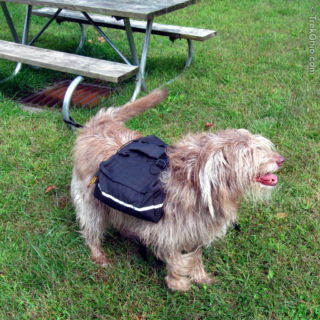 Our dog, Penny, died about a week ago. She was diagnosed as having bone cancer last winter. Other than limping, Penny remained remarkably stable in the ensuing months and continued to enjoy life and the company of her family. Despite having been with her when she died, we still expect to see her at every turn, and we miss her very much. Besides being adorable and adoring us, she accompanied us on numerous outdoor adventures, including backpacking, camping and hiking. We'd like to share a few photos
 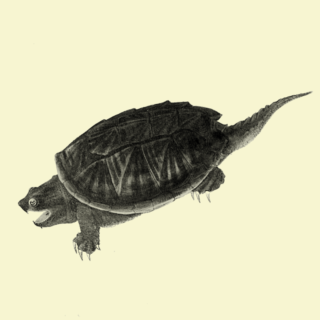 In the following post, I note the distinguishing characteristics of Ohio's turtle species, plus the counties in which they've been sighted.
Family Emydidae
Midland Painted Turtle (Chrysemys picta marginata)
If you've seen a turtle basking in the sun in Ohio, and you're wondering what kind of turtle it is, the odds are that it's a Midland Painted Turtle.
This is one of the most common turtles in Ohio, plus it's easy to spot because it enjoys basking on logs or other objects
In the following post, I note the distinguishing characteristics of Ohio's turtle species, plus the counties in which they've been sighted.
Family Emydidae
Midland Painted Turtle (Chrysemys picta marginata)
If you've seen a turtle basking in the sun in Ohio, and you're wondering what kind of turtle it is, the odds are that it's a Midland Painted Turtle.
This is one of the most common turtles in Ohio, plus it's easy to spot because it enjoys basking on logs or other objects 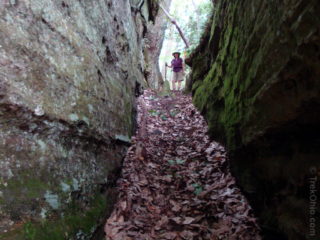 Rhododendron Cove is a spectacular place, but not the easiest preserve to find. Until quite recently, you needed a permit from the state to visit. It's open to the public now, but it's still a fairly well-kept secret. It's as though there's a secret Rhododendron Cove Club whose first rule is: don't talk about the secret Rhododendron Cove Club. I will tell you how to get there. But first let me tell you why you might want to go.
A mowed path leads from the trail with a line of trees
Rhododendron Cove is a spectacular place, but not the easiest preserve to find. Until quite recently, you needed a permit from the state to visit. It's open to the public now, but it's still a fairly well-kept secret. It's as though there's a secret Rhododendron Cove Club whose first rule is: don't talk about the secret Rhododendron Cove Club. I will tell you how to get there. But first let me tell you why you might want to go.
A mowed path leads from the trail with a line of trees 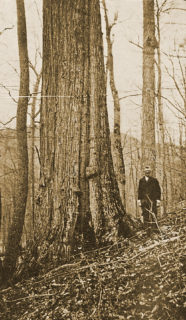 This Metro Park gets its name from a tree that has largely disappeared from North America: the American chestnut tree (Castanea dentata). The American chestnut tree dominated America's forests in the east and in the Ohio Valley until the start of the 20th century. A true giant, the tree grew to be 100 to 150 feet tall (30 to 45 meters) and up to 10 feet (3 m) in diameter. It crowned the ridgeline of the Appalachian mountains; when in bloom, its white blossoms made the mountains look as though they
 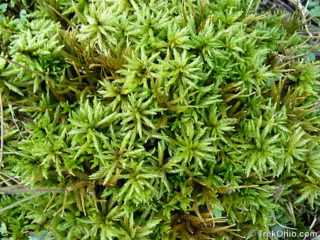 In science fiction, there's something called "terraforming" where people take an inhospitable, alien habitat and make it more earth-like so that people can live there. Well it turns out that sphagnum moss has mastered something similar -- I'm going to call it "boggaforming" -- where it takes a wetland and makes it more and more bog-like. One its secret weapons in this process is dead sphagnum moss. Here are some of the ways that previous generations of sphagnum moss contribute to the success of the
 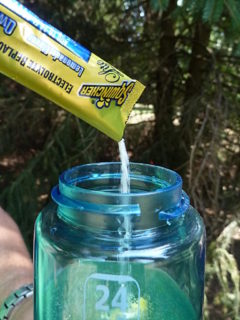 It was a hot, humid day with the temperature in the mid 90's. We'd been hiking for over an hour. The hill that we were climbing was steep. I was in the lead with Deb about 20 yards behind. I'd been out in hotter weather, but it was getting to me. I was feeling really hot and weak. I had eaten a very light breakfast, but was feeling slightly nauseous. I tried to focus and get to the top of the hill. Just a few more steps. Feeling dizzy ... I think I'll just sit on this rock for a minute ...
I
It was a hot, humid day with the temperature in the mid 90's. We'd been hiking for over an hour. The hill that we were climbing was steep. I was in the lead with Deb about 20 yards behind. I'd been out in hotter weather, but it was getting to me. I was feeling really hot and weak. I had eaten a very light breakfast, but was feeling slightly nauseous. I tried to focus and get to the top of the hill. Just a few more steps. Feeling dizzy ... I think I'll just sit on this rock for a minute ...
I 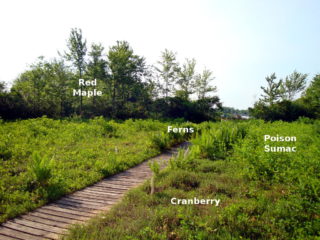 Previously I've pointed out that Jackson Bog and Cedar Bog aren't really bogs. Now it's time to look at a nature preserve that really is the bog that it claims to be: Cranberry Bog State Nature Preserve. However it's not like any other bog in the world since the entire bog is floating in the middle of a lake.
Here's what happened. For thousands of years Cranberry Bog was an ordinary bog located in what came to be known as Big Swamp. In 1830 Ohio decided to build a dyke in Big Swamp
Previously I've pointed out that Jackson Bog and Cedar Bog aren't really bogs. Now it's time to look at a nature preserve that really is the bog that it claims to be: Cranberry Bog State Nature Preserve. However it's not like any other bog in the world since the entire bog is floating in the middle of a lake.
Here's what happened. For thousands of years Cranberry Bog was an ordinary bog located in what came to be known as Big Swamp. In 1830 Ohio decided to build a dyke in Big Swamp