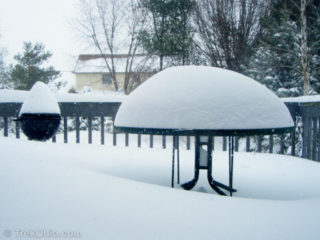
 I decided to set up a bird feeder a few years back because there was just so much snow that year that I felt bad for the little creatures.
Although I originally thought I'd just feed the birds until the snow melted, I ended up feeding the birds all year. One of the rewards of feeding the birds in the summer is getting to watch the parent birds feed their young at the bird feeder. By the time that the young birds can fly around after their parents they are just about the same size as mom Read more ➜
I decided to set up a bird feeder a few years back because there was just so much snow that year that I felt bad for the little creatures.
Although I originally thought I'd just feed the birds until the snow melted, I ended up feeding the birds all year. One of the rewards of feeding the birds in the summer is getting to watch the parent birds feed their young at the bird feeder. By the time that the young birds can fly around after their parents they are just about the same size as mom Read more ➜ Mother Goldfinch Feeding her Fledgling
I decided to set up a bird feeder a few years back because there was just so much snow that year that I felt bad for the little creatures.
Although I originally thought I'd just feed the birds until the snow melted, I ended up feeding the birds all year. One of the rewards of feeding the birds in the summer is getting to watch the parent birds feed their young at the bird feeder. By the time that the young birds can fly around after their parents they are just about the same size as mom Read more ➜ 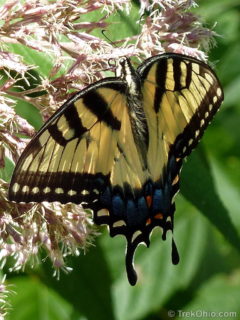 Butterflies with elegant projections extending from their hind wings are known as "swallowtails"; the swallowtails can be seen clearly below. However as a butterfly ages, the outer edges of its wings start to wear away. The thin, little swallowtails are usually the first to go. So you may find yourself looking at a swallowtail species without seeing any swallowtails at all. The "tiger" part of this butterfly's name comes from the four black stripes that start at the outer, front edge of its wings
It's
Butterflies with elegant projections extending from their hind wings are known as "swallowtails"; the swallowtails can be seen clearly below. However as a butterfly ages, the outer edges of its wings start to wear away. The thin, little swallowtails are usually the first to go. So you may find yourself looking at a swallowtail species without seeing any swallowtails at all. The "tiger" part of this butterfly's name comes from the four black stripes that start at the outer, front edge of its wings
It's 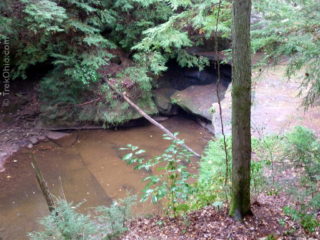 We visited Boord nature preserve on a rainy afternoon in early September. Boord is a small 127 acre preserve in Washington county. The preserve is a few miles down a gravel one lane township road (TR-69). A brown sign identifies it as "Boord State Nature Preserve" and there is a small gravel parking lot and kiosk adjacent to the road.
The preserve has a 3/4 mile loop trail. A light rain had begun and we donned our ponchos and started down the trail. A mown path through some
We visited Boord nature preserve on a rainy afternoon in early September. Boord is a small 127 acre preserve in Washington county. The preserve is a few miles down a gravel one lane township road (TR-69). A brown sign identifies it as "Boord State Nature Preserve" and there is a small gravel parking lot and kiosk adjacent to the road.
The preserve has a 3/4 mile loop trail. A light rain had begun and we donned our ponchos and started down the trail. A mown path through some 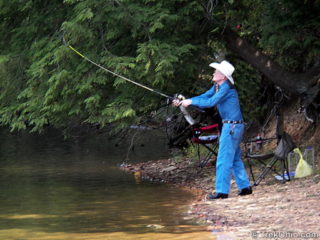 The forested hills of Shawnee State Park are located at Ohio's southernmost tip. The park is large at 1,095 acres, but it's dwarfed by the surrounding Shawnee State Forest. At 63,000 acres, Shawnee State Forest is Ohio's largest state forest. The combined park and forest have 72 miles of trails including the 60 mile Shawnee State Forest backpack trail. The area also features more than 75 miles of bridle trails.
There are two lakes Roosevelt and Turkey Creek which offer fishing, boating,
The forested hills of Shawnee State Park are located at Ohio's southernmost tip. The park is large at 1,095 acres, but it's dwarfed by the surrounding Shawnee State Forest. At 63,000 acres, Shawnee State Forest is Ohio's largest state forest. The combined park and forest have 72 miles of trails including the 60 mile Shawnee State Forest backpack trail. The area also features more than 75 miles of bridle trails.
There are two lakes Roosevelt and Turkey Creek which offer fishing, boating, 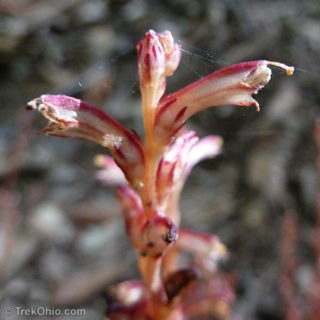 Most plants are green because of their chlorophyll which both tints their leaves and allows them to manufacture their own nutrition. However there are plants without chlorophyll; these plants aren't green, nor do they have leaves. So they turn to other living things to meet their nutritional needs. There are two categories of plants without chlorophyll depending on whether the plant directly gets its nutrition from another plant, or indirectly via a fungus which in turn gets its food from a plant.
 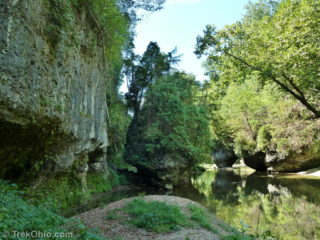 In early September we visited Highlands Nature Sanctuary near Bainbridge, Ohio. The sanctuary is operated by the Arc of Appalachia Preserve System. The sanctuary consists of over 2000 acres of land between Rocky Fork State Park and Paint Creek State Park. The main location contains a museum, three hiking trails, and several cabins that visitors can rent. We stayed at a cabin perched on a ledge overlooking the Rocky Creek gorge.
The preserve has roughly 14 miles of trails scattered
In early September we visited Highlands Nature Sanctuary near Bainbridge, Ohio. The sanctuary is operated by the Arc of Appalachia Preserve System. The sanctuary consists of over 2000 acres of land between Rocky Fork State Park and Paint Creek State Park. The main location contains a museum, three hiking trails, and several cabins that visitors can rent. We stayed at a cabin perched on a ledge overlooking the Rocky Creek gorge.
The preserve has roughly 14 miles of trails scattered 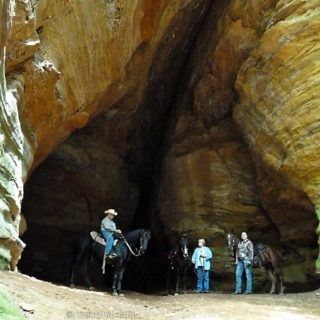 Chapel Cave is a large chapel-shaped, recess cave located off a bridle trail in the Hocking State Forest. The cave is also known as Twenty One Horses Cave because it is reputed to be big enough to hold 21 horses (with their riders).
This posting is the last of a series of hikes we took starting at the parking lot for the Rock climbing and Rappelling Area of the Hocking State Forest. The trailhead for Chapel Cave is located on the north end of this parking lot. It's a bridle trail marked
Chapel Cave is a large chapel-shaped, recess cave located off a bridle trail in the Hocking State Forest. The cave is also known as Twenty One Horses Cave because it is reputed to be big enough to hold 21 horses (with their riders).
This posting is the last of a series of hikes we took starting at the parking lot for the Rock climbing and Rappelling Area of the Hocking State Forest. The trailhead for Chapel Cave is located on the north end of this parking lot. It's a bridle trail marked 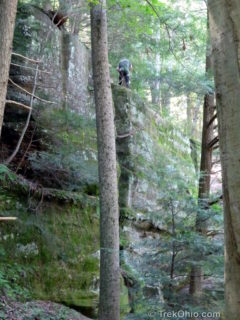 On our visit to Balanced Rock we accidentally ended up in the Rock Climbing and Rappelling Area of Hocking State Forest. This 99-acre region of the Hocking State Forest contains a mile long escarpment of Blackhand sandstone varying in height, topping out at 100 feet. It is the only place on state land in Hocking County that is available for use by rock climbers and rappellers.
That day we saw three groups of climbers using the cliff face. I'm not a rock climber, but the climbers seemed
On our visit to Balanced Rock we accidentally ended up in the Rock Climbing and Rappelling Area of Hocking State Forest. This 99-acre region of the Hocking State Forest contains a mile long escarpment of Blackhand sandstone varying in height, topping out at 100 feet. It is the only place on state land in Hocking County that is available for use by rock climbers and rappellers.
That day we saw three groups of climbers using the cliff face. I'm not a rock climber, but the climbers seemed 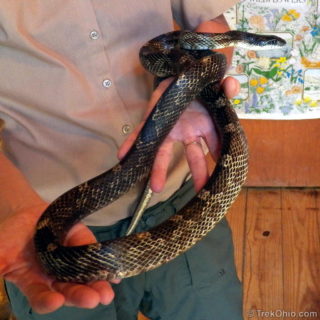 While visiting Shawnee State Park, we decided to stop off at the park's nature center, and we're glad that we did. It turns out that this is the only nature center operated by our state government where the public can touch or hold the local wildlife. The wildlife that was present during our visit consisted of various reptiles and amphibians. In the topmost photo, the park's naturalist lifted an Eastern ratsnake from the terrarium and held it so that visitors could touch it's skin. If a guest was
  The video below shows a group of Whirligig Beetles that I filmed swimming on the water's surface at Hoover Mudflats. They are called "whirligig" beetles because of the way they whirl around in circles when disturbed as seen near the end of this short video.
Direct link to video: https://youtu.be/xk-B0_VyAX4
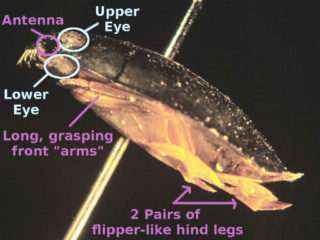
When I first saw these, I had no idea what I was looking at. Since then I've learned quite a bit about them, and they are fascinating little critters. Below is a photo one in profile
The video below shows a group of Whirligig Beetles that I filmed swimming on the water's surface at Hoover Mudflats. They are called "whirligig" beetles because of the way they whirl around in circles when disturbed as seen near the end of this short video.
Direct link to video: https://youtu.be/xk-B0_VyAX4
When I first saw these, I had no idea what I was looking at. Since then I've learned quite a bit about them, and they are fascinating little critters. Below is a photo one in profile