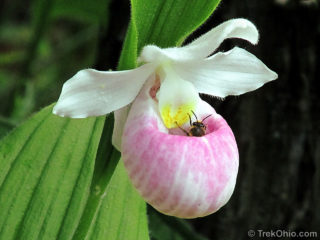
 Cedar Bog is a State Nature Preserve located in Champaign County. We visited the preserve twice during the past several weeks to look at the spring wildflowers. Like many people our favorite bloom from this past weekend was the Showy Lady's Slipper.
Other Early June Sights
I was excited to catch sight of two species of carnivorous plants while visiting Cedar Bog. They are tiny plants, and they are often hidden by the grassy-looking sedges. The first is Round-leaved Sundew (Drosera rotundifolia). Read more ➜
Cedar Bog is a State Nature Preserve located in Champaign County. We visited the preserve twice during the past several weeks to look at the spring wildflowers. Like many people our favorite bloom from this past weekend was the Showy Lady's Slipper.
Other Early June Sights
I was excited to catch sight of two species of carnivorous plants while visiting Cedar Bog. They are tiny plants, and they are often hidden by the grassy-looking sedges. The first is Round-leaved Sundew (Drosera rotundifolia). Read more ➜ Cedar Bog in Late Spring
Cedar Bog is a State Nature Preserve located in Champaign County. We visited the preserve twice during the past several weeks to look at the spring wildflowers. Like many people our favorite bloom from this past weekend was the Showy Lady's Slipper.
Other Early June Sights
I was excited to catch sight of two species of carnivorous plants while visiting Cedar Bog. They are tiny plants, and they are often hidden by the grassy-looking sedges. The first is Round-leaved Sundew (Drosera rotundifolia). Read more ➜ 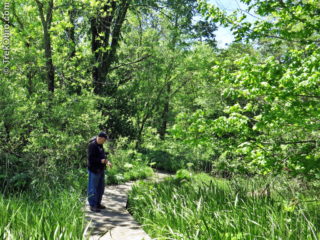 Kiser Lake Wetlands is a 51 acre state nature preserve in Champaign County. It is located in a corner of Kiser Lake State Park. We visited this preserve in mid-May. The preserve has a 0.6 mile boardwalk / trail system that interconnects with the 0.7 mile Red Oak trail in the park making a 1.3 mile loop.
The trailhead is near the southeast end of the lake on Kiser Lake Rd (CR-19), not far from the main campground. A kiosk marks the trailhead. Nearby is a sign for the park's Red
Kiser Lake Wetlands is a 51 acre state nature preserve in Champaign County. It is located in a corner of Kiser Lake State Park. We visited this preserve in mid-May. The preserve has a 0.6 mile boardwalk / trail system that interconnects with the 0.7 mile Red Oak trail in the park making a 1.3 mile loop.
The trailhead is near the southeast end of the lake on Kiser Lake Rd (CR-19), not far from the main campground. A kiosk marks the trailhead. Nearby is a sign for the park's Red 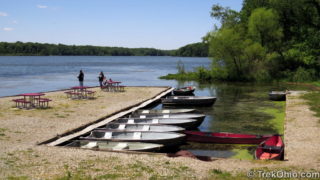 We visited Kiser Lake State Park in Champaign County at the end of May. The park features a 396 acre lake man-made lake. Originally a moraine valley created during the ice age, the lake was formed when a dam was built on Mosquito Creek at one end of the valley.
The lake is 2.5 miles long with 5.3 miles of shoreline and five piers. Additionally, boats (motors prohibited) are available for rent at the park. Many people were fishing the weekend that we were there.
We visited Kiser Lake State Park in Champaign County at the end of May. The park features a 396 acre lake man-made lake. Originally a moraine valley created during the ice age, the lake was formed when a dam was built on Mosquito Creek at one end of the valley.
The lake is 2.5 miles long with 5.3 miles of shoreline and five piers. Additionally, boats (motors prohibited) are available for rent at the park. Many people were fishing the weekend that we were there. 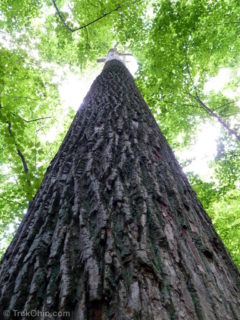 This nature preserve features old growth forest and hilly terrain. Set in the middle of an agricultural region, it's a peaceful area with one of the best wooded lots in the vicinity. There are two trails at the park: Conrad Trail (1.4 miles) and the Short Loop Trail (0.6 miles). The trail seemed well maintained; although, there was a portion of the trail that was quite narrow making it difficult to pass without touching the surrounding vegetation. The preserve's official site states that you can
 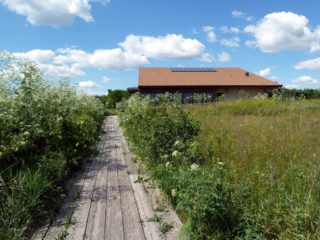 Cedar Bog is a state nature preserve that's managed by the Ohio Historical Society due to its historical significance... or should I say prehistorical significance? There are a number of plants and animals in the preserve that were common in this region at the close of the last Ice Age, but which are now found in cooler, North American climates. Because it is such a unique habitat, in 1941 it was the first nature preserve designated by Ohio. Today it is one of Ohio's 25 National Natural Landmarks.
The
Cedar Bog is a state nature preserve that's managed by the Ohio Historical Society due to its historical significance... or should I say prehistorical significance? There are a number of plants and animals in the preserve that were common in this region at the close of the last Ice Age, but which are now found in cooler, North American climates. Because it is such a unique habitat, in 1941 it was the first nature preserve designated by Ohio. Today it is one of Ohio's 25 National Natural Landmarks.
The 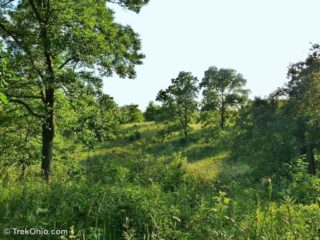 An esker is a special sort of hill. Eskers develop underneath a glacier, so in Ohio they formed during the last ice age. The sediment that eventually creates an esker starts its life as the sand, gravel and rock deposited on the bottom of a riverbed. However the unusual thing about the associated river is that it flows under great pressure beneath a massive glacier. Instead of having normal riverbanks made of earth, this kind of river flows through a crevasse or icy tunnel at the base of a glacier.