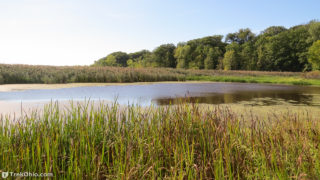
 Mentor Marsh State Nature Preserve occupies 646 acres and contains about four miles of trail; it was Ohio's first state nature preserve. It is located in Lake County at Mentor, Ohio which is about forty miles east of Cleveland. The preserve is just southwest of Headlands Beach State Park.
If you are just interested in exploring the preserve as a hiker or bird watcher, feel free to skip to the section on Getting Oriented.
Hisotry
Mentor Marsh becomes a brackish habitat
Salt mining Read more ➜
Mentor Marsh State Nature Preserve occupies 646 acres and contains about four miles of trail; it was Ohio's first state nature preserve. It is located in Lake County at Mentor, Ohio which is about forty miles east of Cleveland. The preserve is just southwest of Headlands Beach State Park.
If you are just interested in exploring the preserve as a hiker or bird watcher, feel free to skip to the section on Getting Oriented.
Hisotry
Mentor Marsh becomes a brackish habitat
Salt mining Read more ➜ Mentor Marsh State Nature Preserve
Mentor Marsh State Nature Preserve occupies 646 acres and contains about four miles of trail; it was Ohio's first state nature preserve. It is located in Lake County at Mentor, Ohio which is about forty miles east of Cleveland. The preserve is just southwest of Headlands Beach State Park.
If you are just interested in exploring the preserve as a hiker or bird watcher, feel free to skip to the section on Getting Oriented.
Hisotry
Mentor Marsh becomes a brackish habitat
Salt mining Read more ➜ 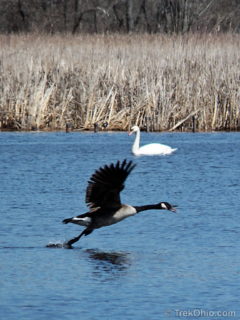 The same day we visited Clifton Gorge, we drove 40 minutes south to Spring Valley Wildlife Area. It was a gorgeous sunny, but cool day. A perfect day for a walk around the lake and marsh at Spring Valley.
Spring Valley is an 842 acre state wildlife area on the border of Greene and Warren counties. It features an archery range, as well as shotgun, rifle and pistol ranges. It also includes a 150 acre lake and marsh with a 2.5 mile trail around it, and an extensive boardwalk leading
The same day we visited Clifton Gorge, we drove 40 minutes south to Spring Valley Wildlife Area. It was a gorgeous sunny, but cool day. A perfect day for a walk around the lake and marsh at Spring Valley.
Spring Valley is an 842 acre state wildlife area on the border of Greene and Warren counties. It features an archery range, as well as shotgun, rifle and pistol ranges. It also includes a 150 acre lake and marsh with a 2.5 mile trail around it, and an extensive boardwalk leading 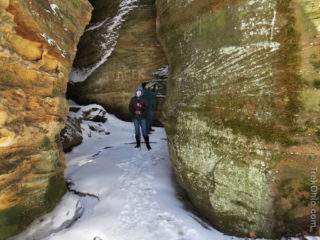 Liberty Park is a 1,908 acre park in Summit County. It features three trails totaling 3.3 miles, several sports fields, a half-acre dog park, and rest rooms. Summit Metro Parks plans to add a nature center in the future.
We'd planned a nice early spring hike in Summit County for the last Sunday in March, but Mother Nature had other plans. We'd driven to Summit County the prior day encountering rain most of the way. Overnight the rain changed to hail and then snow. We awoke to a cold,
Liberty Park is a 1,908 acre park in Summit County. It features three trails totaling 3.3 miles, several sports fields, a half-acre dog park, and rest rooms. Summit Metro Parks plans to add a nature center in the future.
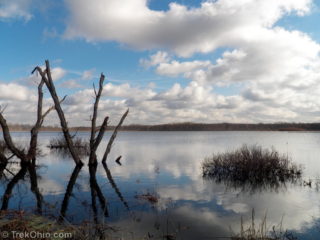
We'd planned a nice early spring hike in Summit County for the last Sunday in March, but Mother Nature had other plans. We'd driven to Summit County the prior day encountering rain most of the way. Overnight the rain changed to hail and then snow. We awoke to a cold, 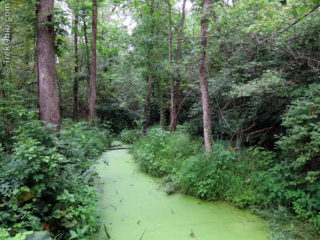 Estel Wenrick Wetlands is a 255-acre preserve that's part of the Clark County Park District in southwest Ohio. Bob and I visited the preserve in late June of last year. As the park district makes clear, recreational use takes a back seat to preserving this high-quality wetland. Although there is a trail and even a boardwalk for the benefit of hikers and birdwatchers, portions of the trail are overgrown, and we encountered a couple downed trees stretching across the trail. But as you can see from
  Killbuck Marsh is a 5,761-acre wildlife area in Wayne and Holmes counties located near the town of Wooster. It is the largest marsh outside of the northern Lake Erie region; over half its acreage is wetland.
The Wildlife Area
A section of the wildlife area is designated as a wildlife refuge and is off-limits to visitors. The remainder is available for hunters (during hunting season) and fishermen. There are a couple of short trails and numerous scattered parking areas and pull-offs
Killbuck Marsh is a 5,761-acre wildlife area in Wayne and Holmes counties located near the town of Wooster. It is the largest marsh outside of the northern Lake Erie region; over half its acreage is wetland.
The Wildlife Area
A section of the wildlife area is designated as a wildlife refuge and is off-limits to visitors. The remainder is available for hunters (during hunting season) and fishermen. There are a couple of short trails and numerous scattered parking areas and pull-offs 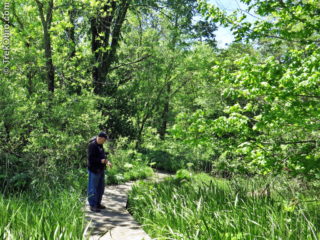 Kiser Lake Wetlands is a 51 acre state nature preserve in Champaign County. It is located in a corner of Kiser Lake State Park. We visited this preserve in mid-May. The preserve has a 0.6 mile boardwalk / trail system that interconnects with the 0.7 mile Red Oak trail in the park making a 1.3 mile loop.
The trailhead is near the southeast end of the lake on Kiser Lake Rd (CR-19), not far from the main campground. A kiosk marks the trailhead. Nearby is a sign for the park's Red
Kiser Lake Wetlands is a 51 acre state nature preserve in Champaign County. It is located in a corner of Kiser Lake State Park. We visited this preserve in mid-May. The preserve has a 0.6 mile boardwalk / trail system that interconnects with the 0.7 mile Red Oak trail in the park making a 1.3 mile loop.
The trailhead is near the southeast end of the lake on Kiser Lake Rd (CR-19), not far from the main campground. A kiosk marks the trailhead. Nearby is a sign for the park's Red 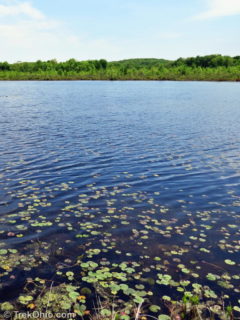 Burton Wetlands is a 305 acre preserve in Geauga County whose terrain was shaped by glaciers during the most recent Ice Age. Most notably there are two glacial kettles in the preserve. A glacial kettle forms when a glacier calves over a land surface (that's when a huge chunk breaks off). As the glacier recedes and the calved ice melts, a lake takes its place. The plants living in and around the glacial kettles of Ohio would normally be found farther north in Canada. They are living remnants of Ohio's
 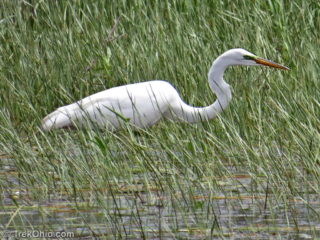 The Ottawa National Wildlife Refugee is located next to Lake Erie between Magee Marsh and Metzger Marsh. It is a great place to go birding because it is another stop-over during the spring / fall bird migration, particularly for water birds in the spring. It's also a nesting / hunting area for local eagles.
Entrance to the refuge is off of State Route 2 in Ottawa County. The visitors center features a small exhibit area, conference rooms, maps of the refuge, restrooms, and a telescope
The Ottawa National Wildlife Refugee is located next to Lake Erie between Magee Marsh and Metzger Marsh. It is a great place to go birding because it is another stop-over during the spring / fall bird migration, particularly for water birds in the spring. It's also a nesting / hunting area for local eagles.
Entrance to the refuge is off of State Route 2 in Ottawa County. The visitors center features a small exhibit area, conference rooms, maps of the refuge, restrooms, and a telescope 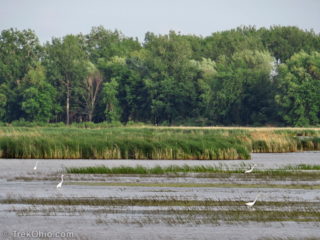 Metzger Marsh is a 558 acre marsh bordered by Lake Erie, the Ottawa National Wildlife Refuge, and a canal used by private watercraft. It is a site ideal for fishing and bird watching. It's located between Maumee Bay State Park and Magee Marsh Wildlife Area.
We ended a vacation day in northwest Ohio with a post dinner drive out to Metzger Marsh. From the entrance on Bono Road, we passed a parking lot and a boat launch. An access road - Metzger Marsh State Road, parallels the marsh
Metzger Marsh is a 558 acre marsh bordered by Lake Erie, the Ottawa National Wildlife Refuge, and a canal used by private watercraft. It is a site ideal for fishing and bird watching. It's located between Maumee Bay State Park and Magee Marsh Wildlife Area.
We ended a vacation day in northwest Ohio with a post dinner drive out to Metzger Marsh. From the entrance on Bono Road, we passed a parking lot and a boat launch. An access road - Metzger Marsh State Road, parallels the marsh 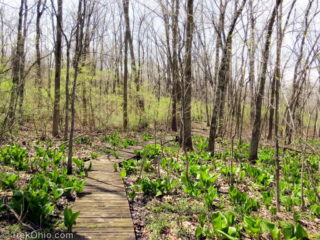 Fen habitats are America's most diverse habitat for vegetation, and many rare plants are found in fens. A fen is a type of wetland formed when water bubbles up from an underlying aquifer via an Artesian well or seep. In the case of Gallagher Fen, the water emerges from a hillside seep because two aquifers intersect nearby increasing the underground water pressure. Since the water is emerging from deep within the earth through limestone gravel dumped by glaciers during the last Ice Age, the water