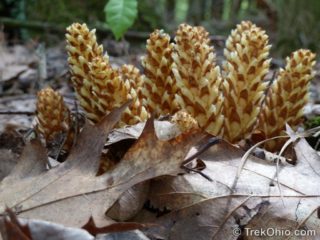
 When other seeds germinate, the seedlings struggle to emerge into the sunlight, so they can photosynthesise and make their own nutrition. When a squawroot seed germinates, it squirms farther underground in search of its nourishment. It "feels around" in the dark until it finds the root of an oak or beech tree and latches on for dear life. For the rest of its life it will feed parasitically off these tree roots. The oak roots develop little, knobby protuberances where the squawroot has latched on, Read more ➜
 Squawroot: An underground plant without leaves or chlorophyll
When other seeds germinate, the seedlings struggle to emerge into the sunlight, so they can photosynthesise and make their own nutrition. When a squawroot seed germinates, it squirms farther underground in search of its nourishment. It "feels around" in the dark until it finds the root of an oak or beech tree and latches on for dear life. For the rest of its life it will feed parasitically off these tree roots. The oak roots develop little, knobby protuberances where the squawroot has latched on, Read more ➜ 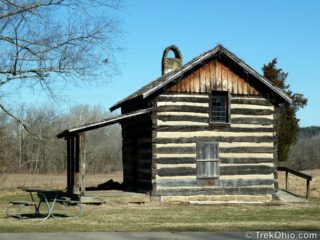 There are three different trail groupings at Blackhand Gorge State Nature Preserve, but for the longest time we only knew of the main parking lot and the trail head that leads off from there. So at the end of this post there's a map and directions showing the location of them all. The icon used to locate the feature on the map is described in parentheses after each heading.
Blackhand Trail, Quarry Rim Trail & Chestnut Trail(Cabin Icon)
There is an old log cabin at the main parking lot across
There are three different trail groupings at Blackhand Gorge State Nature Preserve, but for the longest time we only knew of the main parking lot and the trail head that leads off from there. So at the end of this post there's a map and directions showing the location of them all. The icon used to locate the feature on the map is described in parentheses after each heading.
Blackhand Trail, Quarry Rim Trail & Chestnut Trail(Cabin Icon)
There is an old log cabin at the main parking lot across 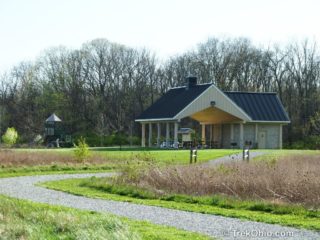 Gallant Woods Preserve is part of Delaware County's Preservation Parks system. In contrast to many of the parks that we have discussed which are tourist attractions in their own right, Gallant Woods is more of a local community resource. It consists of 231 acres of mixed habitat including old growth woods, a wetlands woods, a meadow that's being converted into prairie, and glacial moraine. There's now 1.8 miles of developed trail with more trails planned for the future. The existing trails are all
 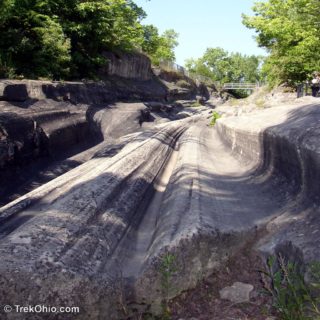 The glacial grooves on Kelley's Island are a designated National Natural Landmark. They were formed during the last Ice Age about 18,000 years ago, and they are the world's largest, known glacial striations. Typically glacial striations are formed when boulders and gravel are dragged across the bedrock under the immense weight of a glacier. Geologists rely on these natural features to determine the direction in which the now-melted ice once flowed. However according to the Ohio Department of Natural
 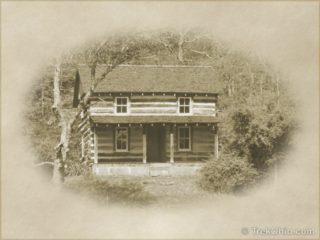 Quite a few of the parks where I hike have structures or other vestiges of days gone by. During our hike to Clear Creek Metro Park, there was a log cabin and a barn made of hand-hewn timber. For a while I had been thinking, "Wouldn't it be fun to take my photos of these structures, and give them a vintage look?" So here is my first effort at doing just that.
I followed the instructions I found in this YouTube video to do the above photo-editing. The instructor in the video
Quite a few of the parks where I hike have structures or other vestiges of days gone by. During our hike to Clear Creek Metro Park, there was a log cabin and a barn made of hand-hewn timber. For a while I had been thinking, "Wouldn't it be fun to take my photos of these structures, and give them a vintage look?" So here is my first effort at doing just that.
I followed the instructions I found in this YouTube video to do the above photo-editing. The instructor in the video 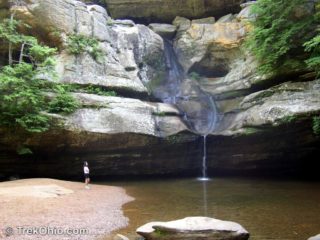 Cedar Falls is a scenic waterfall situated on the trail halfway between Old Man's Cave and Ash Cave. The falls was named by early settlers after the nearby cedar trees, of which there are none. The settlers misidentified the native hemlock trees as cedars.
Cedar Falls can be reached by car on SR 374, just a short drives from either Old Man's Cave or Ash Cave. Amenities include several parking lots, picnic shelters, rest rooms, and drinking water. Although there are several hiking
Cedar Falls is a scenic waterfall situated on the trail halfway between Old Man's Cave and Ash Cave. The falls was named by early settlers after the nearby cedar trees, of which there are none. The settlers misidentified the native hemlock trees as cedars.
Cedar Falls can be reached by car on SR 374, just a short drives from either Old Man's Cave or Ash Cave. Amenities include several parking lots, picnic shelters, rest rooms, and drinking water. Although there are several hiking 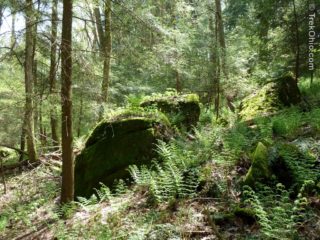 Clear Creek Metro Park is part of the Columbus / Franklin Metro Park system, but is located an hours drive from Columbus in the Hocking Hills region.
The entrance to the park is off of route 33. You'll pass a cliff, a large slump block, and a log cabin and reach a parking area in a valley containing the Clear Creek that gave its name to the park. Numerous hiking trails are available in the combined 5,260 acre metro park and the adjacent 4,729 Clear Creek State Nature Preserve. Amenities
Clear Creek Metro Park is part of the Columbus / Franklin Metro Park system, but is located an hours drive from Columbus in the Hocking Hills region.
The entrance to the park is off of route 33. You'll pass a cliff, a large slump block, and a log cabin and reach a parking area in a valley containing the Clear Creek that gave its name to the park. Numerous hiking trails are available in the combined 5,260 acre metro park and the adjacent 4,729 Clear Creek State Nature Preserve. Amenities 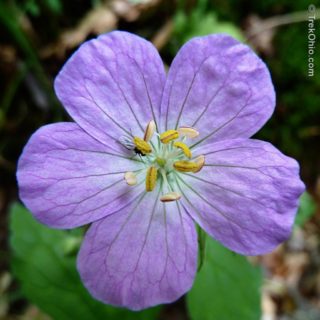 This post features assorted, spring flowers that I photographed this past April in Ohio that did not have spiders on them. Click on a flower if you'd like to see a larger version of it. Hovering over each photo with your mouse will display the species name if I've managed to identify it (Update: I've since gone back and added an identifying caption after each pair of flowers). If you can identify any of the mystery flowers, I'd love to hear from you in the comments.